
The Weekend You Actually Took Off
Two Years Without a Real Weekend
She runs a small design studio out of her spare room, three retainer clients and a rotating list of one-off projects. For two years, every Saturday and Sunday had the same shape. Check the inbox at eight, check it again at noon, check the site chat before bed just in case someone was looking at pricing. Not because anything urgent ever came through, but because she couldn't be sure nothing would, and that uncertainty was worse than the checking.
The cost of that habit never showed up as a line item, but it was real. Two hours a day of half-attention, phone face up on the counter during dinner, the low hum of waiting for a notification that might mean a lead or might mean nothing. Multiply that by every weekend for two years and you get something close to five hundred hours of a life half-lived, spent guarding a business that, most of the time, didn't need guarding at all. She knew the math didn't add up. She just didn't have another option.

The breaking point wasn't a burnout moment or a big blowup. It was smaller than that. A Sunday afternoon in June, she looked up from her phone mid-conversation with her sister and realized she hadn't heard the last thing she'd said. That's the moment most solo owners recognize, even if the details differ. The business isn't just competing with your work hours anymore. It's competing with the two days you're supposed to get back.
What changed wasn't a new client or a slower month. It was setting up the pieces of Prigmar that actually mattered to her, the social agent for the daily post, the chat agent for the site, and the invoicing agent for the retainer clients who paid net-30 and needed reminders. Prigmar setup time was the first thing she wanted to know before committing a weekend to testing it, because she'd been burned before by tools that promised automation and delivered another dashboard to babysit. In her case, connecting the three agents and reviewing their default settings took under an hour, spread across one weekday evening. That's the number that made the weekend possible. Not the promise of automation, the actual time it took to get it running.
What Would Have Happened the Old Way
Picture the same weekend two years ago, before any of this existed. Friday's post doesn't go out because she's the one who writes it, and she's off the grid. Saturday night, someone lands on the site at eleven, reads the pricing page, has a question about turnaround time, and leaves without asking it because there's no one there to answer. Sunday morning, an invoice that's nine days overdue sits exactly where it sat Friday, because chasing payment on a weekend felt intrusive and she didn't want to be the person emailing clients about money on a Sunday.
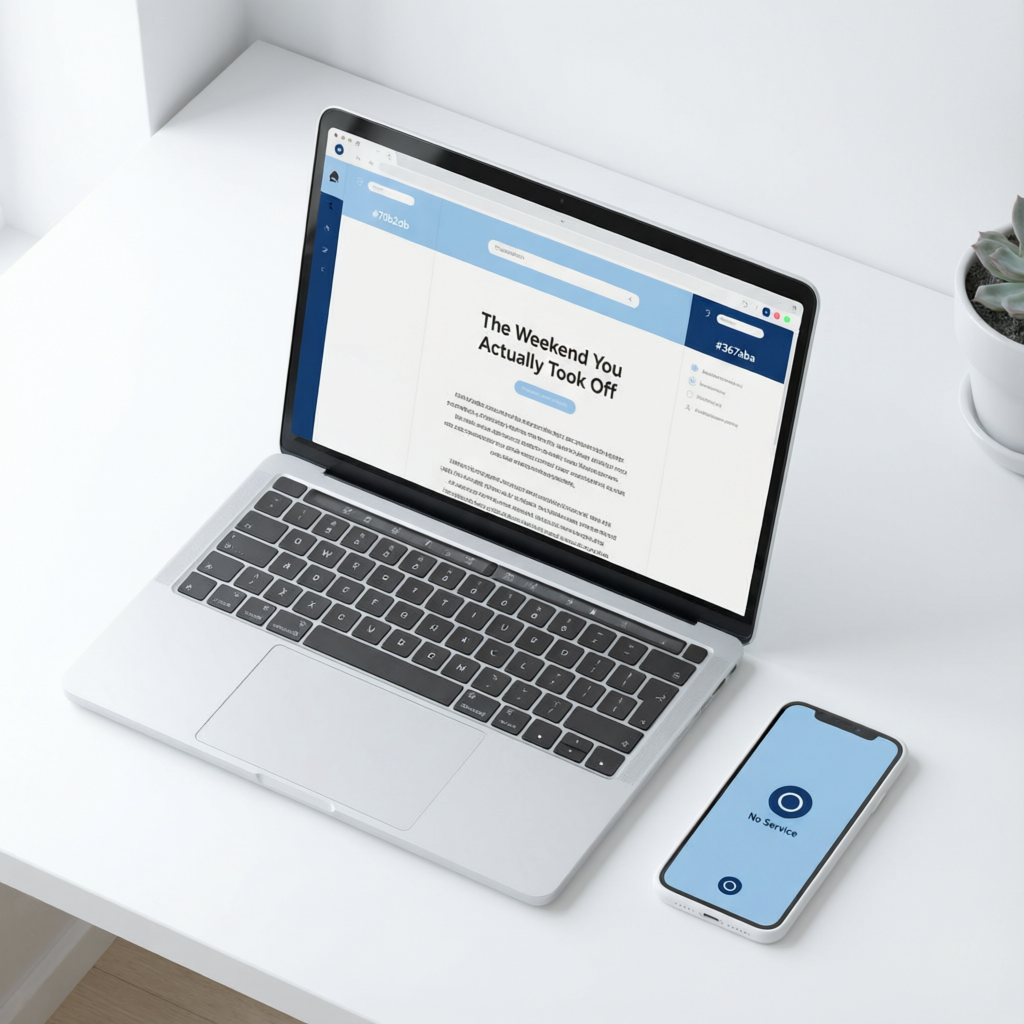
By Monday, the backlog would have been three things deep. A missed post to explain or skip, a lost lead she'd never know about because the visitor never left contact info, and an invoice that was now sixteen days late instead of nine. None of those are catastrophic on their own. That's exactly the problem. Small enough to justify checking your phone all weekend, big enough to add up into a business that never actually stops needing you, even when you desperately need it to.
This is the version of small business life a lot of solo owners quietly accept as the cost of doing it alone. You don't have a social media person, so you're the social media person, including on weekends. You don't have a receptionist, so the site goes unanswered after six. You don't have an accounts receivable clerk, so invoices age past due while you decide whether now is a bad time to ask for money you're already owed. Every one of those gaps is a small tax on being independent, and most owners pay it without ever adding it up.
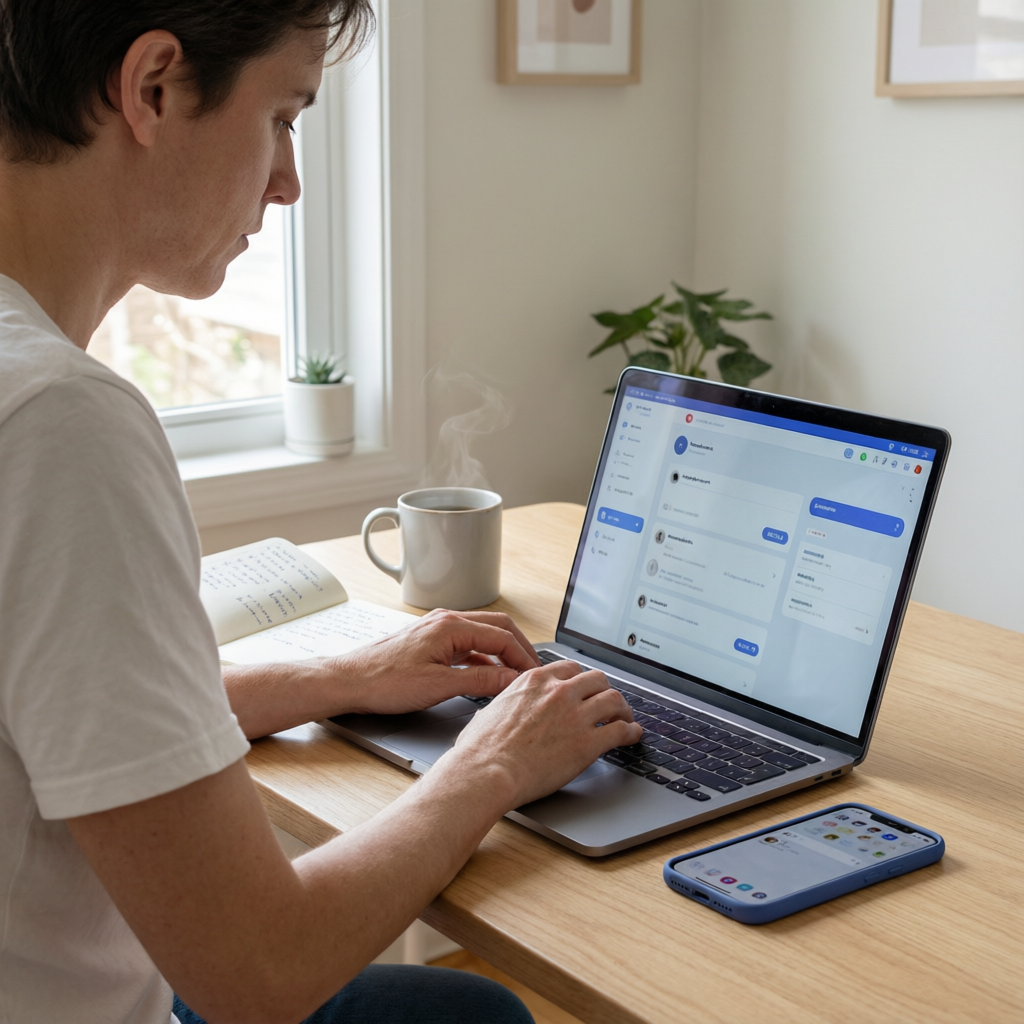
The search for something like a small business CRM with invoicing usually starts here, at the exact moment someone realizes the gaps aren't small anymore, they're structural. The tools that solve one piece, a scheduler for posts, a chatbot for the site, a separate invoicing app, still leave you stitching the pieces together and checking each one. The gap isn't a missing feature. It's a missing weekend, and no single-purpose tool gives that back.
What Actually Happened Instead
Friday's post went out at the scheduled time, same as every day that month, written and queued days earlier so the weekend didn't depend on her touching anything. Saturday at eleven at night, a visitor landed on the site with a question about rush turnaround for a logo project. The chat agent answered it, asked two follow-up questions, and captured the visitor's email and project details before they left the page. She didn't see the message until Sunday night. The lead was already sitting in her inbox, warm and detailed, not a missed opportunity she'd never know about.
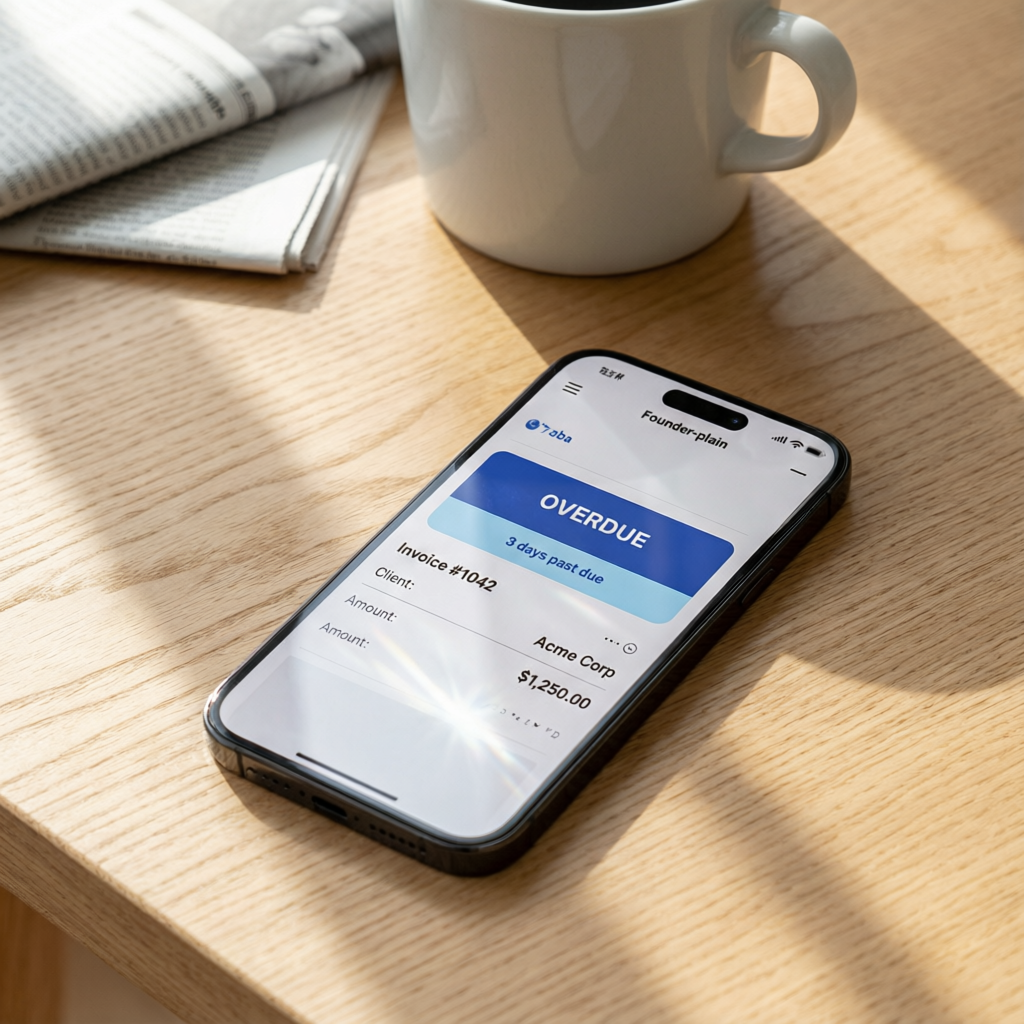
Sunday morning, the invoicing agent sent a reminder on the invoice that had crossed its due date three days earlier, the one she'd been meaning to nudge someone about but hadn't gotten around to. By the time she checked her phone that evening, the client had paid. One lead, one payment, zero posts missed. That's the tally from a weekend she didn't manage at all, and it's a better outcome than most of her actively-managed weekends from the year before.
This is the case for treating an AI chat support software for small business as core infrastructure rather than a nice-to-have. It's not about looking responsive. It's about the fact that an eleven-p.m.-Saturday visitor is a real person with a real project, and the six-hour gap between when they show up and when a solo owner wakes up on Monday is exactly the window competitors fill. A visitor who gets an answer at eleven p.m. often books before a visitor who has to wait until nine a.m. Tuesday for a reply that's now competing with everything else in that owner's inbox.
What struck her most wasn't any single piece, it was that the pieces worked together without her routing information between them. The lead the chat agent captured didn't need her to copy it into a CRM. The invoice reminder didn't need her to check who'd already been nudged. When people ask what makes something the best AI CRM for solo entrepreneurs, this is usually the real answer, not more features, just fewer handoffs that depend on a person who's supposed to be offline.
The Actual Win Wasn't the Weekend
It would be easy to frame this as a story about rest, and rest matters, but that undersells what happened. The real win was coming back Monday morning to a business that had kept moving without her, not a business that had frozen and was waiting to be restarted. There's a specific kind of dread solo owners know, the Monday-morning dread of opening your laptop after time away and finding forty things that need attention because nothing happened while you were gone. This time, there was no backlog. There was a lead to follow up on and a payment already in the account.

That difference, backlog versus momentum, is the entire case for setting this up in the first place. It's why Prigmar setup time matters as a real number and not a vague promise. An hour of setup on a Tuesday evening bought back an entire weekend, and more importantly, it bought back every weekend after that one, because the agents don't need to be reconfigured each time. She's since gone offline three more weekends since June. Each time, the same shape holds. Posts go out, the chat agent handles whoever shows up, invoices get chased without her writing the awkward follow-up email.
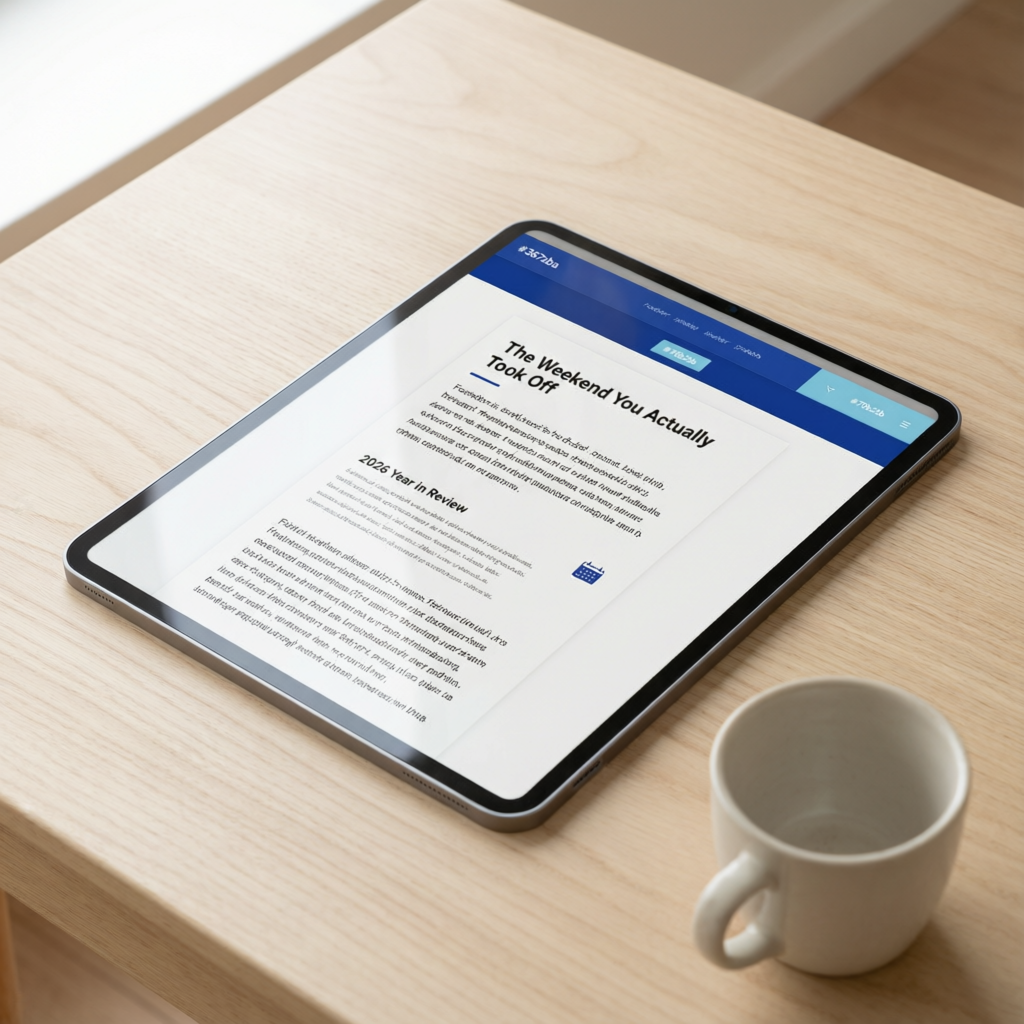
Looking back at a full year of this running in the background is its own kind of clarifying exercise, the sort of thing that turns into a prigmar year in review 2026 conversation with other owners who've done the same. Not a review of features used, a review of weekends actually taken, leads that didn't slip through, invoices that got paid closer to on time instead of chased down two months later. That's the number that matters more than uptime or feature count.
The takeaway isn't that automation replaces her. She still does the design work, still talks to clients, still makes every real decision in the business. What changed is that the business no longer requires her constant presence just to keep functioning at a basic level. The weekend she actually took off wasn't a lucky gap in an otherwise demanding schedule. It was the first proof that the business could hold itself together for two days, which is exactly what convinced her it could hold together for a week, and eventually, for as long as she needed it to.