
Your invoice is still unpaid. Here's the fix.
The Silence After a Proposal
You spend an hour on a proposal. You check the terms, the timeline, the pricing. You hit send, and then you wait. A day passes. A week. Nothing. The silence grows louder, and you start to wonder if you got the details wrong, if the price was too high, or if they never opened the file. Most solo operators live in this gap. The work is great, but the follow up is dead.
That quiet stretch is where deals go to die. Not because the client lost interest, but because someone else sent a second email. Someone else checked in on day three. Someone else made it easy to say yes. Your proposal gets lost in an inbox, then a busy week, then a forgotten tab. You tell yourself you'll follow up soon, but soon never comes because you're already onto the next task.
Here's what I see with most solo operators: the work is great, but the follow up is dead. The craft is solid. The case studies are strong. The pricing is fair. Yet the closing rate stays low, and it's not the service that's failing. It's the chase. You made something worth buying, then you let it sit in silence until the window closes.

Prigmar's follow up agent handles the chase. It sends the reminder on day two. It re-sends the proposal on day five. It nudges with a light message that doesn't beg. The client gets a professional, polite ping that keeps you top of mind. You don't have to remember or schedule or worry about being annoying. The agent just runs the sequence until you get an answer.
That changes the math. One proposal that used to close 20% of the time now closes 30% or 40%, because the follow up happens. You stop losing deals to silence and start winning them on persistence. The client wasn't ignoring you. They just needed a nudge to move you up the list.
Why Solo Operators Skip the follow up
Skipping follow up isn't laziness. It's fear. You worry about being pushy, about bothering a busy person, about looking desperate. So you wait a polite amount of time, then wait a little longer, and then the moment passes. You tell yourself they would have replied if they wanted to. But that's not how busy people work. They want to hire you. They just have forty other things competing for their attention.
There's also the issue of time. A solo operator juggles delivery, admin, and marketing. Follow up feels like a task you can postpone because it's not urgent. It sits at the bottom of the list until the window closes. Then the client hires someone else, and you never find out why. You assume price or fit. It was probably just that someone asked twice.
Prigmar removes the emotional and logistical friction. You don't have to think about the follow up because the agent owns it. It spaces out reminders so you never feel pushy. It even check Prigmar system status to see if a client opened your proposal or clicked a link, so you know when to send a personal note. That data keeps you calm. You're not guessing. You're working with real signals.
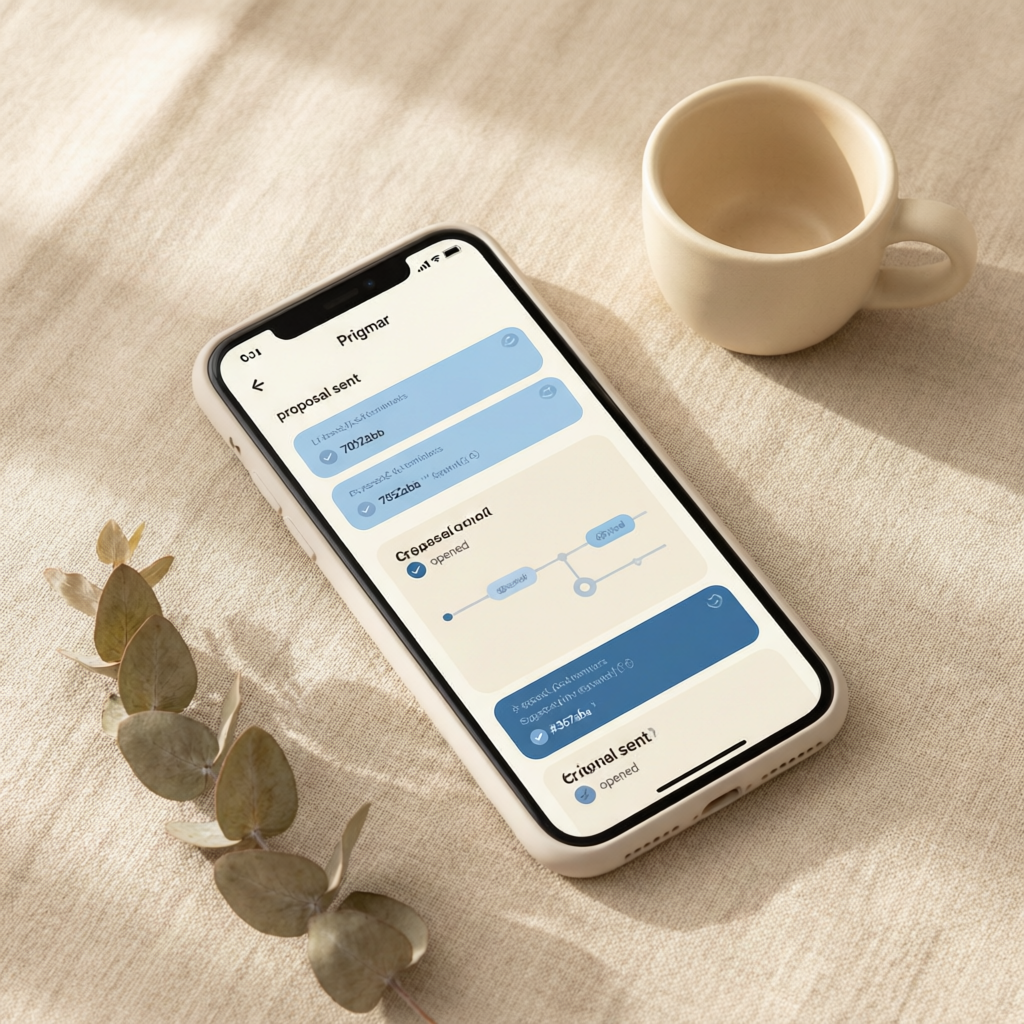
When you automate the chase, you free up the mental space that used to hold worry. Instead of wondering if you should send a second email, you spend that energy on the project you already closed. The agent handles the nudge. You handle the work. That division is what lets you scale a solo business beyond a single pair of hands.
The truth is, clients respect follow up. A simple reminder shows you care about the outcome, not just the invoice. It keeps you professional and reliable. With Prigmar, you get that persistence without the awkwardness, because the agent writes the message and sends it at the right time.
How Prigmar's follow up Agent Works
Prigmar's follow up agent plugs into your existing flow. Connect your email or calendar, and it watches your outbox for the word proposal, quote, or estimate. When you send one, the agent starts a quiet timer. No setup. No rule writing. Just a simple trigger that begins the sequence you choose.
You pick the intervals. Two days after sending, a light check-in. Five days later, a re-send with a small update. After eight days, a final note that asks directly if the timing works. The agent handles all of it. You approve the drafts once, and then it runs on autopilot. If the client replies, the agent stops and hands the conversation to you.
What makes this different from a generic reminder is the intelligence underneath. The agent can track opens and clicks through Prigmar analytics dashboard features, so you see if they even looked at the file. If they didn't, it adjusts the message. If they did, it sends a more direct follow up. That layer of awareness turns a blind nudge into a smart closing tool.

You stay in control because everything is editable. Before the agent sends anything, you get a preview. Approve it once, and it repeats the pattern for every future proposal. Or you can set it to send them and trust the agent to sound like you. Either way, you stop asking twice personally. The agent does the asking, and you close the work that shows up.
That's the win. You write the proposal, send it, and move on. The agent keeps the thread alive. Days later, you get an email that says the client wants to move forward. No awkward chase. No silence eating your week. Just a closed deal.
What Happens When You Never Follow Up
Let's be honest about the cost. Every proposal you send without a follow up is a bet that the client will act on their own. Some do. Most don't. A study of sales behavior would show that a lead is far more likely to buy after multiple touches. You know the stat. Follow up increases closes. Yet you still skip it.
The real loss isn't just one deal. It's the compounding effect. Each missed follow up is a missed client, a missed referral, a missed project that could have led to three more. Over a year, that's a significant amount of revenue lost to silence. Not because your work was bad, but because you didn't ask twice.
Prigmar's follow up agent exists for that exact gap. It makes the follow up inevitable. You can't forget to chase because the chasing is handled. The agent sends the reminder, re-sends the proposal, and nudges until you get an answer. You don't have to ask twice. You just close the work that shows up.
Imagine the calendar a year from now. You've sent forty proposals. Each one got a structured follow up. Even if the close rate holds at 30%, that's twelve new clients you wouldn't have had before. That's the difference between a business that plateaus and one that grows steadily.
And it's not just about proposals. The same agent can follow up on invoices, meeting requests, or partnership inquiries. It keeps every thread moving. You become the person who always responds, even when you're too busy to respond yourself.
Beyond follow up: The Full Prigmar System
follow up is one agent among nine. Prigmar made a full business management system for solo operators. Imagine tying that follow up into a CRM that tracks every contact. When a proposal goes out, the CRM logs it. When the client replies, the system updates the record. You have a clean history of every interaction without typing a note.
That's where the Prigmar HubSpot integration comes in. It connects the follow up agent to your existing CRM, so data flows both ways. No duplicate entries. No forgotten details. The integration keeps your pipeline honest and your follow up on time. It's one less system to check and one fewer source of truth to maintain.
The analytics dashboard shows you what's working. Which follow up messages get replies? Which timing wins? You see response rates and close rates in one place. That data tells you if your proposals are strong or if your follow up cadence needs a tweak. You stop guessing and start improving.

For product businesses, the Prigmar Shopify integration means when a customer abandons a cart, the agent can send a reminder. Same principle, different use case. The system grows with you, from a few proposals a month to a steady stream of inbound work.
The onboarding checklist gets you live in a day. Connect your channels, pick the agents you need, and let the system run. You don't need a technical team. You need a clear agenda, and Prigmar handles the rest. Prigmar security and compliance keep your data safe, so you can trust the automation with your client details.
Your Move: Stop Losing Deals to Silence
You have a choice. Keep sending proposals and hoping for a reply, or let an agent handle the chase. The first path is how most solo operators work. It's also why so many top-tier freelancers and consultants stay stuck at the same revenue level. The second path is why some of your peers are closing deals you never saw.
Start small. Send your next proposal through Prigmar. Set the follow up to send them or approve the messages once. Then watch what happens. You'll see an open rate, a click, a reply. That feedback loop changes how you write proposals and how you price your work.
You'll still write the proposal. You'll still nail the discovery call. But the tedious part, the reminder, the re-send, the nudge, that's gone. You get back hours each week that you used to spend refreshing your inbox. You get back the peace of mind that comes from knowing nothing falls through the cracks.

followers up isn't optional. It's how business gets won. With Prigmar, you never have to say 'I meant to follow up' again. The agent does it for you, calmly and consistently. Your only job is to deliver the great work that keeps clients coming back.
Close the gap. Stop the silence. Let a follow up agent carry the thread while you made the business you want. The proposals you send this month deserve more than a quiet inbox. They deserve a system that fights for them.