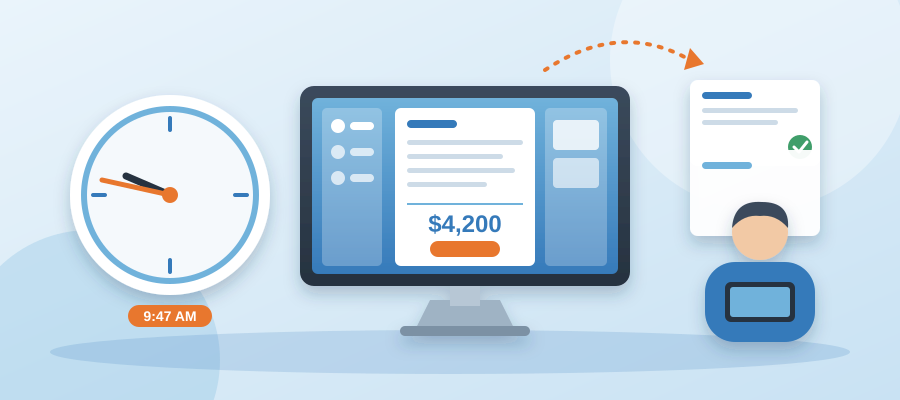
Buyers Compare Quotes Within Minutes. Your 9:47 AM Reply Cost You a $4,200 Deal.
The 11-hour gap that closed the deal without you
You quoted $4,200 on a Tuesday. The buyer read it at 8:04 PM and asked one question: does that include revisions. You answered at 9:47 the next morning. By then they had two other quotes. One was $3,900. The other was $4,400. They went with the $4,400 because that person replied at 8:19 PM, 14 minutes after the question landed. You lost $4,200 to a scheduling gap, not to price.
The real cost is not just the lost deal. You spent 45 minutes building that quote. You pulled project details, checked your calendar, wrote a careful scope. All of that work sat in a thread that died overnight. The buyer did not wait for you to wake up. They moved on to the next name on their list. That is the quiet tax of running everything alone.
Most solo owners think the problem is speed of quoting. It is not. The problem is the follow up after the quote goes out. The buyer's question at 8:04 PM had a simple answer. A system that knew your scope could have replied in two minutes. You did not have that system. You had an inbox and a sleeping phone.

A small business CRM with invoicing does not just store the quote. It watches for replies and triggers a response when a buyer asks a question. It can send a holding note that says you will answer in the morning. Better: it can answer the revision question directly if you have set up your knowledge base. That two-minute reply keeps the deal alive until you are at your desk.
Buyers compare quotes within minutes now. Not hours. The old expectation of a next-day reply is gone. If your quote arrives at 8 PM and you answer at 9:47 AM, you are not in the running. You are a backup. The $4,200 hole in your month is the proof.
Most CRMs stop at storage. You need a system that acts.
The average small business CRM is a database. It holds names, emails, and deal stages. You still have to remember to follow up. You still have to notice when a quote goes unanswered. That is not a system. That is a filing cabinet with a nice interface. Solo owners do not need another place to look. They need something that moves without them.
Prigmar runs 9 agents on one subscription. One of them is the lead acquisition agent. It watches for new inquiries and replies within seconds. Another is the invoicing agent. It generates quotes, sends reminders, and tracks whether the money actually landed. You do not chase payments by hand. The reminder agent follows up on a cadence until the invoice is marked paid. That is the difference between a CRM and a CRM with invoicing built in.
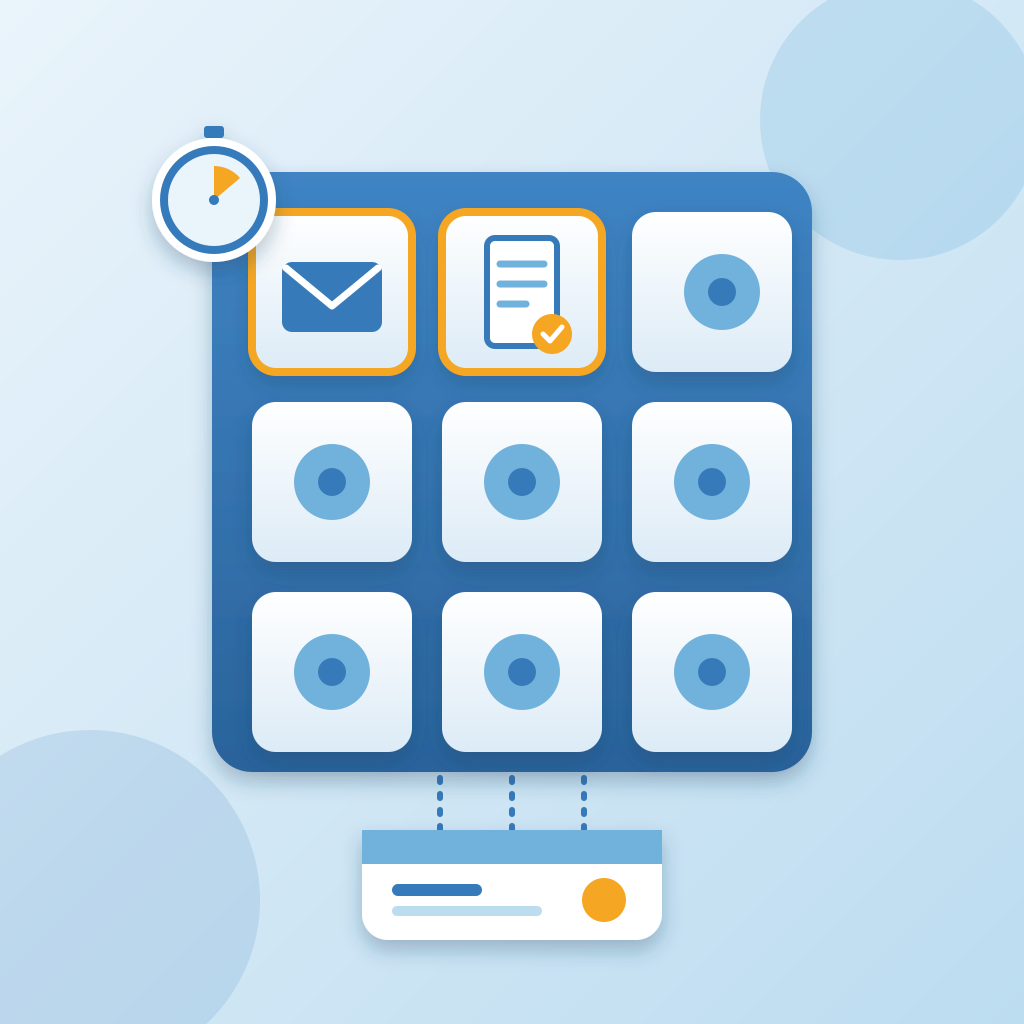
Take the 8:04 PM question. With Prigmar, the buyer asks if the quote includes revisions. The chat support agent or the email agent checks your knowledge base. It sees the standard scope note: two rounds of revisions included. It replies at 8:06 PM. The buyer gets an answer while you are watching TV or already asleep. They do not open the other two quotes with the same urgency because their question is answered. You stay in the lead.
The cost of a basic CRM setup for a 10 person team can run into thousands per month. For a solo owner, that is not the comparison. The comparison is the $4,200 deal you lost and the $4,200 deal you will lose next month if nothing changes. A CRM with email marketing automation and invoicing in one place costs less than a part-time assistant. And it does not sleep.
Most schedulers stop at posting. We do not. Prigmar also chases overdue invoices, follows up leads, and answers website visitors in seconds. That is the whole job, not just the calendar.
What a two-minute reply looks like in your day
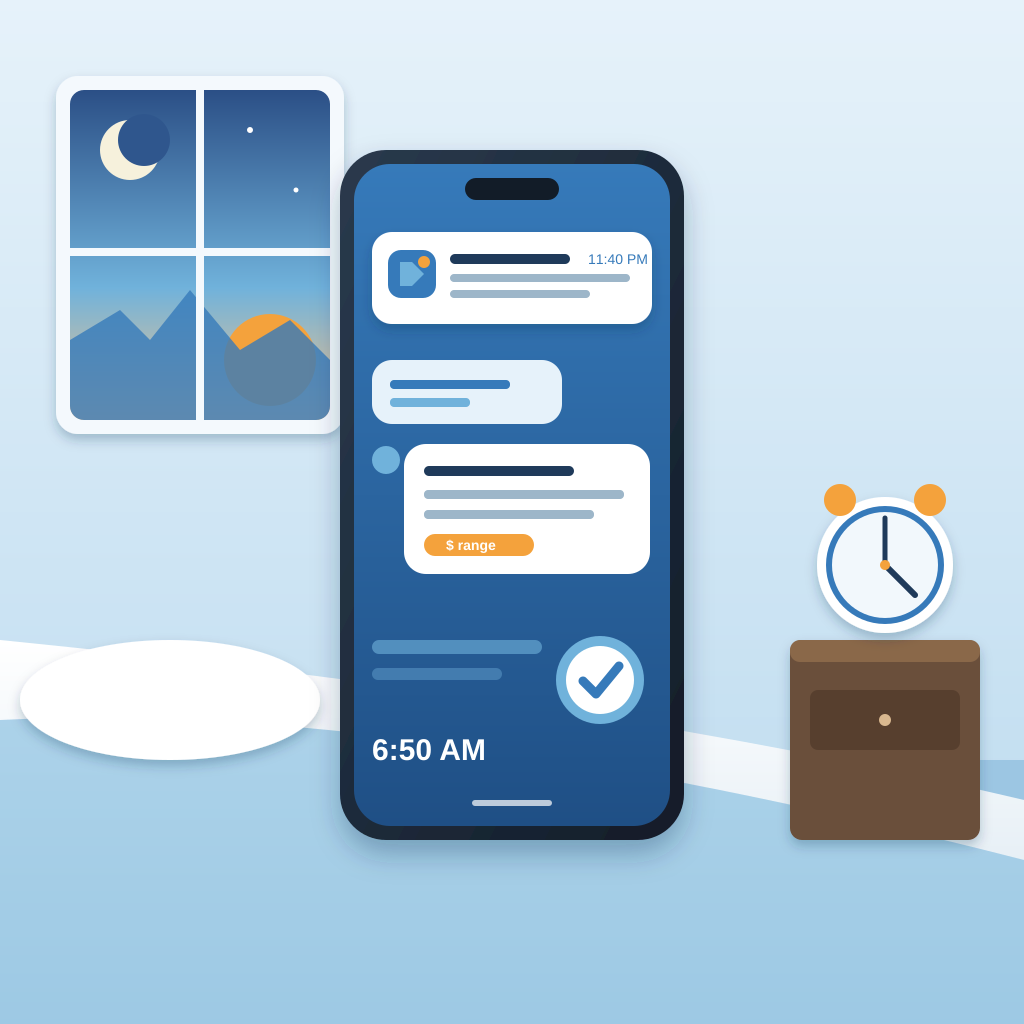
You wake up at 6:50 AM. You check your phone. There is a notification from Prigmar: a lead came in at 11:40 PM and was answered by the chat agent. The visitor asked about pricing for a monthly retainer. The agent gave a range based on your knowledge base and captured their email. The lead is already in your CRM with a note. You did not write a word.
At 7:15 AM, another notification. A scheduled post failed on LinkedIn. The worker job failed at 7:13. Prigmar tells you within two minutes. You click through and fix the connection. Your feed does not go cold. You do not find out at 6 PM from a client asking why you stopped posting. That two-minute alert is the difference between a quiet mistake and a public one.
By 9:47 AM, when you normally would have replied to the $4,200 quote question, the deal is already moving. The buyer got their answer at 8:06 PM the night before. They replied at 8:12 PM: great, can you start Monday. You wake up to a deal that is ready to close. You did not have to be fast at 9:47. You just had to have a system that was fast at 8:04.
Booking a CRM demo with onboarding support should feel like this. No consultant. No six-week implementation. Prigmar connects to your channels, you pick the agents you want, and you either approve the work or let it auto-publish. The onboarding is the demo. You see it working on your own site within an afternoon.
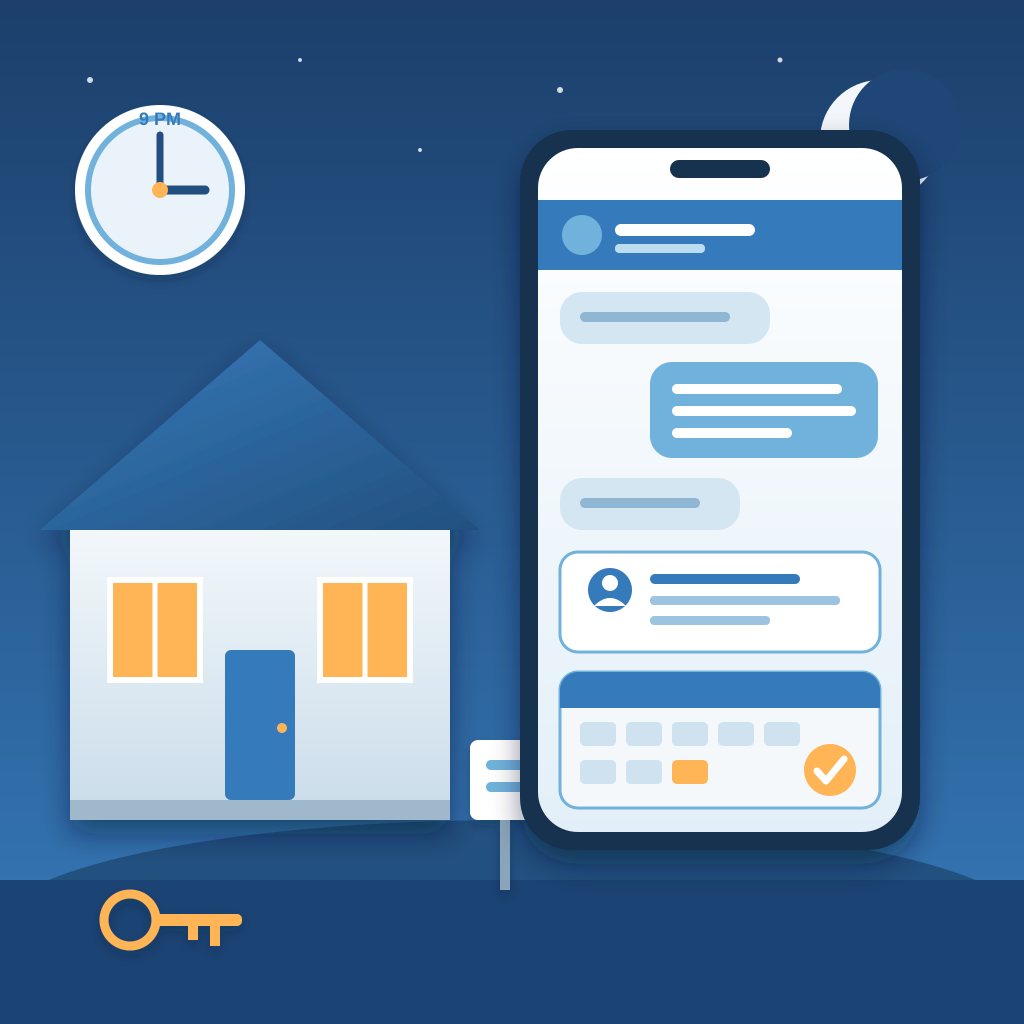
If you are a real estate agent with listing tracking needs, the same logic applies. A lead comes in at 9 PM about a new listing. The agent answers with details from your knowledge base, captures their contact info, and books a showing. That is a CRM for real estate agents with listing tracking built in, not bolted on. The reply happens when the buyer is ready, not when you are.
The math of waiting until morning
Let us put real numbers on the 9:47 AM reply. If you send 10 quotes a week and two of them get late-night questions, that is eight deals a month where your reply time is measured in hours, not minutes. If half of those go to a faster competitor, you lose four deals. At $4,200 average, that is $16,800 a month in lost revenue. That is not a marketing problem. That is an operations problem.
The cost of fixing it is not a full-time hire. A small business CRM with invoicing that answers questions and chases payments costs a fraction of that lost revenue. You are not buying software. You are buying back the deals that die in your inbox overnight. You are buying the 45 minutes you spent on the quote and the follow up you never sent.
There is also the cost of chasing invoices by hand. You send a quote. You send an invoice. You wait. You check your bank. You send a reminder. You feel awkward about it. That cycle takes 20 minutes per invoice. Twelve invoices a month is four hours. Prigmar's invoicing agent handles that cadence automatically. It sends reminders until the invoice is marked paid. You stop drafting polite emails at 10 PM.
A CRM with built-in VoIP calling would let you call a lead from the same screen. Prigmar does not do VoIP yet. It does the rest: it captures the lead, answers the first question, and books the call. You step in when it matters. The 8:04 PM question is handled. The 9:47 AM reply is no longer your job.

Most schedulers stop at posting. That is the line. They schedule a tweet and call it a day. They do not know whether the quote went out, whether the buyer asked a question, or whether the invoice was paid. Prigmar runs the whole job from one subscription. The social post goes out. The quote goes out. The follow up goes out. The invoice reminder goes out. And you hear about it in two minutes when something fails.
Your next quote does not have to die overnight
The buyer who asked at 8:04 PM was not unreasonable. They were comparing options in the evening because that is when they had time. They did not expect you to be awake. They expected a system that could answer a basic scope question. You can be that system without being awake. You just need the right agent in place.
Start with one thing: the chat support agent on your website. It answers from your knowledge base and hands off to you when it matters. That alone catches the 11:40 PM visitor and the 8:04 PM quote question. Add the invoicing agent next. It sends the quote, tracks the reply, and chases the payment. Two agents. One afternoon to set up. The $4,200 deal stays in your pipeline.
You do not need to hire a marketing person or a virtual assistant. You need a small business CRM with invoicing that acts like one. Prigmar runs its own marketing on these agents. Every post you see from Prigmar was produced by Prigmar. The demo is the product working. That is the proof.

So the next time you quote $4,200 on a Tuesday, you will not wake up to silence. You will wake up to an answered question and a buyer who is still interested. The gap between 8:04 PM and 9:47 AM is not your problem anymore. The system covers it. You just run the business.